
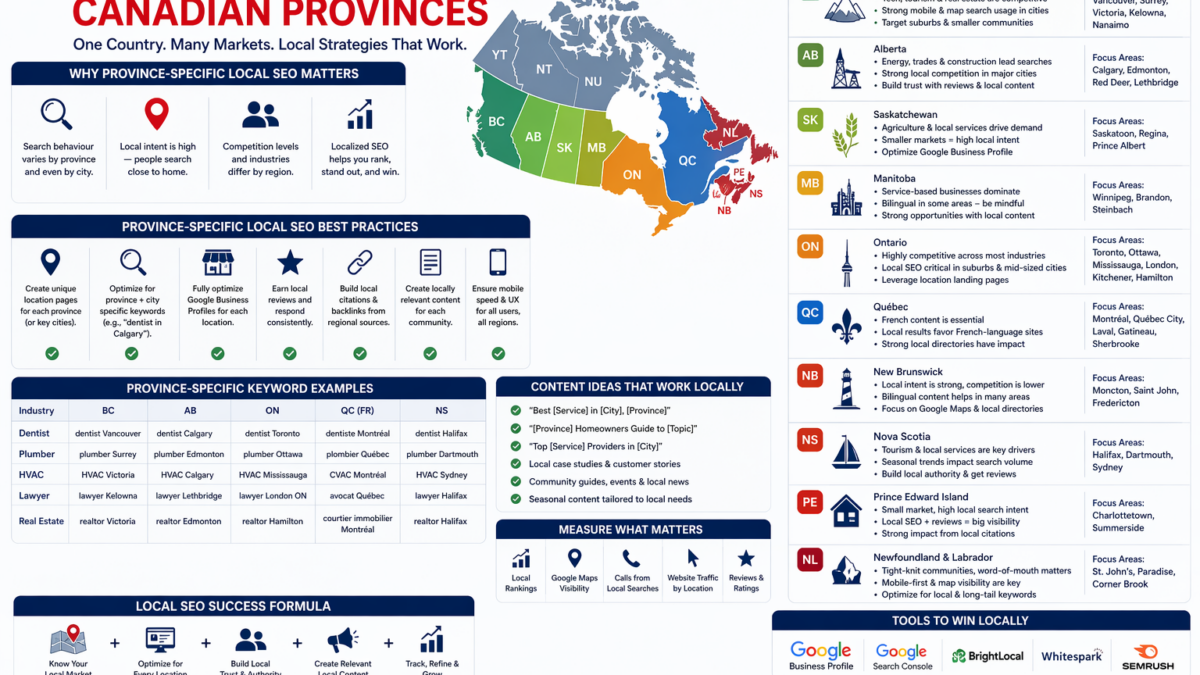
Local SEO in Canada is not a one-size-fits-all strategy. While the country operates under a single national search engine ecosystem, user behavior, competition levels, and trust signals vary significantly from province to province. A strategy that works in Ontario may underperform in British Columbia, and tactics effective in Alberta may fail entirely in Quebec.
In 2026, search engines expect businesses to demonstrate provincial relevance, not just national presence. This blog explores how local SEO works across Canadian provinces, why many businesses struggle with regional visibility, and how to build scalable local strategies that convert.
Why Provincial SEO Matters in Canada
Canada’s geographic and cultural diversity directly influences search behavior.
Key factors include:
- Population density differences
- Language and cultural nuances
- Economic activity by province
- Local competition intensity
Search engines reward businesses that understand and reflect these regional realities.
Ontario: High Competition, High Standards
Ontario dominates Canadian search volume, especially in cities like Toronto, Mississauga, and Ottawa.
Characteristics of Ontario SEO:
- Extremely competitive keywords
- High user expectations
- Strong presence of national brands
Ranking here requires more than basic optimization it demands authority, depth, and consistency.
Businesses investing in Professional SEO services Canada often focus heavily on Ontario because success here strengthens national credibility.
British Columbia: Value-Driven and Experience-Focused
BC users are more selective and research-oriented.
Successful SEO in BC emphasizes:
- Authentic brand messaging
- Experience-based content
- Strong visual and UX signals
Overly aggressive or sales-driven content performs poorly in this province.
Alberta: Intent-Focused Search Behavior
Alberta searches tend to be more transactional.
Users often:
- Compare service providers
- Look for efficiency and ROI
- Prioritize credibility over branding
SEO strategies here benefit from clear service pages, transparent pricing signals, and strong reviews.
Quebec: Language and Localization Are Non-Negotiable
Quebec is a unique SEO environment.
Key requirements include:
- French-first content (not direct translation)
- Culturally aligned messaging
- Local trust indicators
Ignoring linguistic nuance results in low engagement and weak rankings.
Smaller Provinces, Strong Opportunities
Provinces like Manitoba, Saskatchewan, Nova Scotia, and New Brunswick often have:
- Lower competition
- Higher local intent
- Strong community-based trust signals
Well-optimized local pages can dominate these markets faster than major metros.
This is where Affordable SEO services Canada can deliver strong ROI when strategy is correctly localized.
Google Business Profiles by Province
Local pack results vary by region.
Best practices include:
- Province-specific service descriptions
- Accurate service areas
- Regular updates and local photos
Profiles that feel “generic” underperform across all provinces.
Reviews as Regional Trust Signals
Review behavior differs by province.
For example:
- Urban users expect high review volume
- Smaller provinces value detailed reviews
- Quebec users respond strongly to localized language
Review strategy must adapt regionally.
Location Pages That Actually Rank
Effective provincial SEO requires more than city name insertion.
High-performing pages include:
- Province-specific FAQs
- Regional service adaptations
- Local testimonials or case examples
These signals help search engines understand true relevance.
Avoiding Internal Competition
Many Canadian businesses accidentally compete with themselves.
Common issues:
- Multiple pages targeting the same province
- Overlapping service areas
- Weak internal linking
Clear geographic intent prevents cannibalization.
Content Strategy Across Provinces
Content should scale without duplication.
Smart approaches include:
- Province-level pillar pages
- City-level supporting pages
- Internal links that reflect geography
This structure supports both rankings and usability.
Technical SEO and Regional Performance
Page speed and mobile experience matter more in regions with:
- Slower average internet speeds
- Higher mobile usage
Optimizing performance ensures consistent engagement nationwide.
Measuring Success Province by Province
National averages hide local problems.
Track:
- Rankings by province
- Conversion rates by region
- Engagement metrics per location
Granular analysis enables smarter decisions.
This analytical approach is what defines a true SEO expert in Canada, not surface-level reporting.
Common Provincial SEO Mistakes
Avoid these frequent errors:
- Copy-pasting location pages
- Ignoring Quebec language requirements
- Treating all provinces equally
- Over-centralizing local decisions
These mistakes limit growth.
Future of Local SEO in Canada
Looking ahead:
- AI will evaluate regional authenticity
- Engagement signals will outweigh proximity
- Brand trust will influence local rankings
Provincial SEO will become even more nuanced.
Conclusion
Local SEO across Canadian provinces requires more than national optimization—it demands regional understanding, cultural awareness, and structured execution. Businesses that respect provincial differences build stronger visibility, higher trust, and better conversion rates.
Those that ignore regional nuance struggle with inconsistent performance and wasted effort. In Canada, local SEO success is earned province by province.
FAQs
1. Is local SEO different in each Canadian province?
Yes. User behavior, competition, and trust signals vary widely.
2. Should I create separate pages for each province?
Yes, if done with unique, relevant content.
3. How important is French content for Quebec SEO?
Critical. Direct translations are not sufficient.
4. Can one Google Business Profile rank across provinces?
No. Profiles rank locally based on physical presence.
5. How long does provincial SEO take to show results?
Usually 3–6 months, depending on competition and execution.
Leave a Reply