
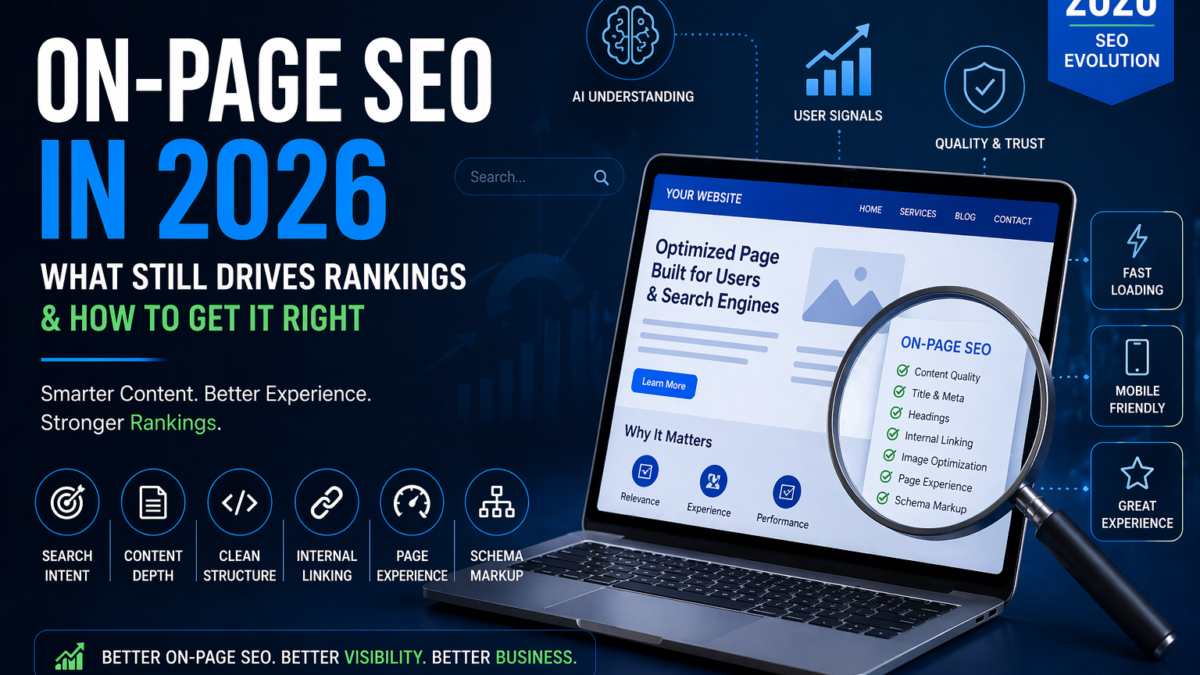
On-page SEO has always been the foundation of search engine optimization, but by 2026 it has matured into something far more sophisticated than simply placing keywords on a page. Search engines now evaluate pages holistically, combining artificial intelligence, behavioral data, and quality signals to understand not just what a page is about, but how useful it is to real users. This evolution has shifted the focus from mechanical optimization to experience-driven relevance.
Despite rapid changes in algorithms, on-page SEO remains one of the most controllable and impactful aspects of digital marketing. Unlike off-page factors that rely on external signals, on-page optimization gives businesses direct influence over how their content is structured, presented, and interpreted. In competitive markets like India, where millions of pages compete for visibility, getting on-page SEO right can be the difference between consistent growth and digital obscurity.
This blog explores what truly drives rankings in 2026, which on-page SEO practices still deliver measurable value, and how businesses can adapt their content and technical foundations to meet modern search expectations without chasing outdated tactics.
How On-Page SEO Has Evolved by 2026
The most notable shift in on-page SEO is the way search engines interpret content. Algorithms no longer rely heavily on exact keyword placement. Instead, they analyze semantic relevance, topical depth, and contextual relationships between words and phrases. A page that clearly explains a topic from multiple angles is more likely to rank than one that simply repeats a target keyword.
User engagement metrics have also become deeply integrated into ranking systems. Time on page, scroll behavior, interaction with elements, and return visits help search engines evaluate whether content truly satisfies user intent. This means that writing for humans is no longer just best practice; it is a ranking requirement.
Another major evolution is the tighter integration between content and technical performance. Page experience signals such as load speed, mobile usability, visual stability, and accessibility directly affect how content is evaluated. A well-written article on a slow or poorly designed page struggles to compete with a slightly less detailed article that offers a smoother experience.
What Still Drives Rankings in On-Page SEO
While many techniques have been refined, the core drivers of on-page SEO remain surprisingly consistent. Content quality, relevance, structure, and usability continue to form the backbone of strong rankings. What has changed is the standard to which each of these elements is held.
Content Relevance and Search Intent
Understanding and matching search intent is still the single most important on-page factor. Search engines in 2026 classify intent with remarkable accuracy, distinguishing between informational, transactional, navigational, and comparative queries. Pages that fail to align with the dominant intent rarely perform well, regardless of optimization.
High-performing pages address intent clearly and early, then expand with supporting details, examples, and context. This approach signals relevance while encouraging deeper engagement.
Content Depth and Authority
Thin content has little chance of ranking in competitive niches. Depth does not mean unnecessary length, but rather comprehensive coverage of a topic. Authoritative pages demonstrate expertise through clarity, accuracy, and originality.
Key characteristics of authoritative content include:
- Clear explanations supported by real-world examples
- Logical progression from basic concepts to advanced insights
- Updated information that reflects current industry standards
- A consistent tone that builds trust and credibility
This type of content not only ranks better but also earns organic backlinks and repeat visitors over time.
The Role of HTML Structure and Semantic Markup
Proper HTML structure remains a critical on-page SEO factor. Headings, subheadings, and semantic elements help search engines understand content hierarchy and context. In 2026, this structure is even more important because it supports AI-driven summarization and featured result generation.
Well-structured pages typically include:
- A single, clear H1 that defines the main topic
- Logical use of H2 and H3 headings to break down subtopics
- Short paragraphs that improve readability on mobile devices
- Contextual internal links that guide users to related content
This structure benefits both users and search engines, creating a smoother reading experience while reinforcing topical relevance.
Page Experience as a Ranking Signal
Page experience has evolved from a technical checklist into a holistic quality signal. Search engines evaluate how users feel when interacting with a page, not just how fast it loads.
Important page experience elements include:
- Fast loading times across all devices
- Mobile-first design with intuitive navigation
- Minimal layout shifts during page load
- Clear visual hierarchy and readable typography
Pages that prioritize experience tend to retain users longer, reducing bounce rates and increasing engagement, which in turn supports stronger rankings.
Internal Linking and Content Relationships
Internal linking remains a powerful but often underutilized on-page SEO tactic. In 2026, search engines use internal links to understand content relationships, topical authority, and site structure.
Strategic internal linking helps by:
- Distributing authority across important pages
- Guiding users toward deeper, relevant content
- Helping search engines discover and index new pages faster
The key is relevance. Links should feel natural and useful, not forced or excessive.
On-Page SEO in the Indian Digital Market
The Indian digital landscape presents unique challenges and opportunities for on-page SEO. Multilingual audiences, mobile-first users, and varying levels of digital literacy require content that is clear, accessible, and culturally relevant. Businesses operating in this environment often rely on SEO services in India to balance global best practices with local search behavior and expectations.
Competition across industries has raised the bar for on-page optimization. Pages must now demonstrate value immediately, especially for mobile users with limited attention spans. Clear messaging, fast performance, and strong trust signals are essential for visibility and conversions.
Why Consistency Matters More Than Ever
Consistency across on-page elements is a major ranking factor in 2026. Search engines evaluate whether titles, headings, body content, and metadata align around a single, coherent topic. Mixed signals or unfocused pages struggle to build authority.
Consistent optimization includes:
- Unified topic focus across all page elements
- Matching metadata with on-page content
- Regular content updates to maintain freshness
This consistency helps search engines confidently rank pages for relevant queries over the long term.
Choosing the Right SEO Expertise
As on-page SEO becomes more nuanced, businesses increasingly seek specialized guidance. Many organizations look for the best SEO company in India not just for implementation, but for strategic insight, content planning, and performance analysis. The right partner understands how on-page elements fit into a broader digital ecosystem rather than treating them as isolated tasks.
Similarly, working with a top SEO agency in India often means gaining access to cross-functional expertise, including content strategists, technical specialists, and data analysts who collaborate to refine on-page performance continuously.
For businesses that want a balance between strategic planning and hands-on execution, professional SEO services India offer structured processes, transparent reporting, and a long-term focus on sustainable rankings rather than short-term gains.
Conclusion
On-page SEO in 2026 is not about abandoning old principles but about refining them to meet higher standards. Quality content, clear structure, strong user experience, and consistent relevance continue to drive rankings, even as algorithms become more intelligent. The difference today lies in execution. Search engines reward pages that genuinely serve users, demonstrate authority, and perform flawlessly across devices.
Businesses that treat on-page SEO as an ongoing process rather than a one-time task are best positioned for long-term success. By focusing on fundamentals while adapting to modern expectations, brands can build durable visibility in an increasingly competitive digital environment.
FAQ
Is on-page SEO still important in 2026?
Yes, on-page SEO remains essential because it directly influences how search engines understand and evaluate your content.
Do keywords still matter for on-page optimization?
Keywords matter in terms of context and intent, but excessive repetition is no longer effective. Relevance and clarity are more important.
How often should on-page content be updated?
Content should be reviewed regularly and updated whenever information becomes outdated or user expectations change.
Does page speed really affect rankings?
Yes, page speed is a critical component of page experience and directly impacts both rankings and user engagement.
Can good on-page SEO compensate for weak backlinks?
Strong on-page SEO can significantly improve visibility, but the best results come from a balanced strategy that includes both on-page and off-page optimization.
Leave a Reply